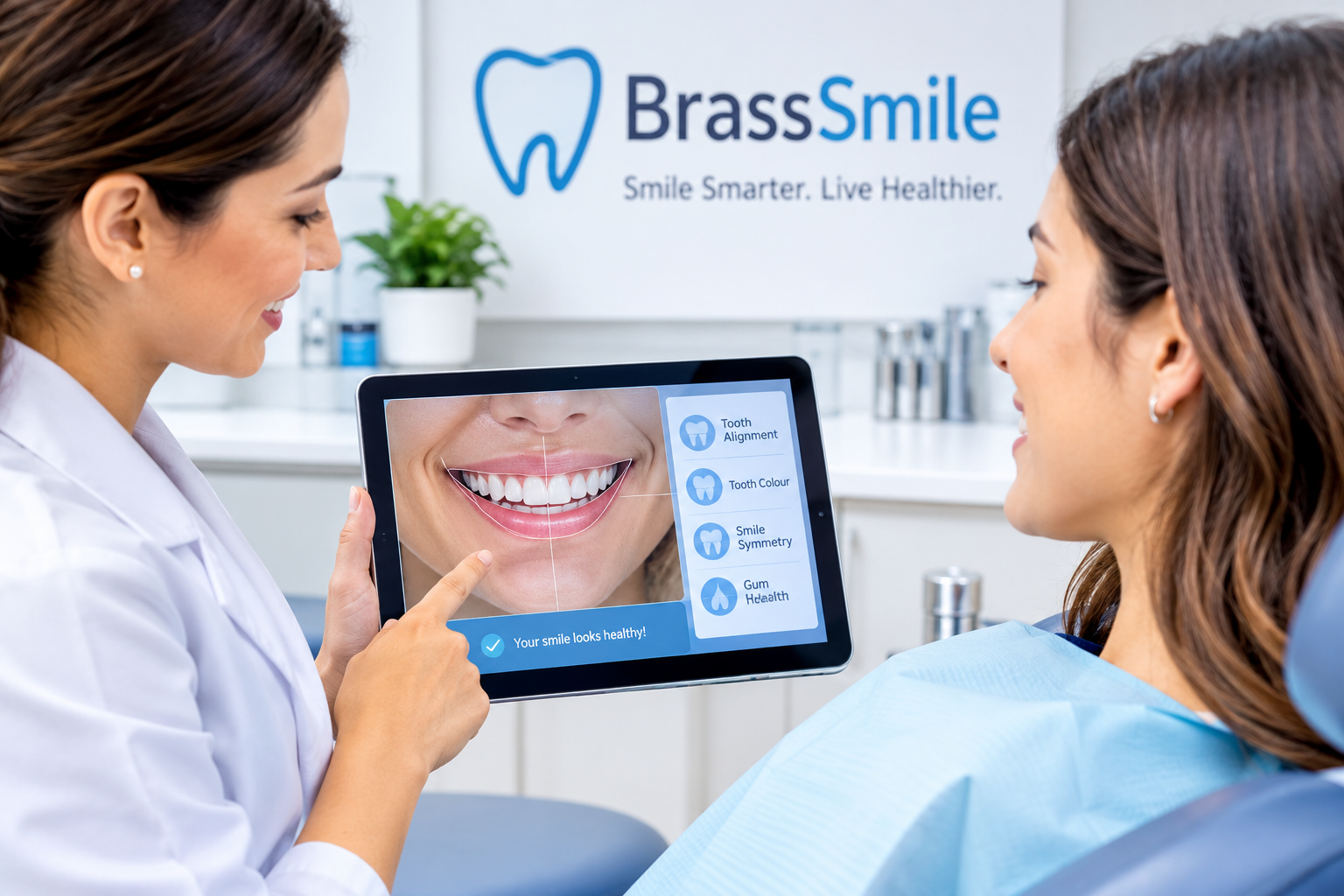
BrassSmile is a name associated with online smile analysis, dental information, and cosmetic dentistry. However, not every website using this name represents the same business or provides the same services. Understanding what a particular BrassSmile website actually offers is an important first step before relying on its information, uploading personal photographs, or considering dental treatment.
AI-powered smile analysis is one of the technologies associated with this name. These tools can help people explore the appearance of their smiles and understand certain visible dental characteristics. They can also introduce users to cosmetic dentistry and orthodontic treatment, although a digital assessment is not a substitute for a professional dental examination.
A healthy smile involves more than the appearance of teeth. Gum health, tooth structure, bite alignment, oral hygiene, and preventive care all contribute to long-term dental health. This guide explains how BrassSmile relates to digital smile analysis, what modern dentistry can offer, and what readers should understand before making decisions about their oral health.
What Is BrassSmile and How Does It Relate to Modern Dental Care?
BrassSmile is a name used by multiple websites, including websites that describe themselves as AI smile analysis platforms, dental information resources, or providers of dental-related services. Because these websites may have different purposes and owners, readers should verify the exact website they are visiting rather than assuming every BrassSmile reference points to the same organization.
For example, BrassSmile Digital describes an AI smile analysis tool that uses photographs to generate cosmetic observations and treatment suggestions. Its published tool information also states that its results are estimates for informational purposes and should not replace an examination by a qualified dental professional.
Smile Analysis Platform+1
Modern dentistry combines preventive care, restorative treatment, cosmetic procedures, and technologies that help dental professionals examine teeth and plan care. The purpose of these services is not simply to create a more attractive smile. They also help maintain oral health, address existing dental problems, and support the long-term function of teeth and gums.
When exploring BrassSmile, it is useful to distinguish between a digital information tool and a dental practice. A website that provides smile analysis may help users understand visible features of their smiles, while a dental clinic can examine oral health and provide treatment within the scope of its professional services. The exact capabilities of any BrassSmile service should be confirmed through its own published information.
How AI Smile Analysis Helps People Understand Their Smiles
AI smile analysis uses digital technology to examine visual information about a person’s smile. Depending on the software, it may identify visible characteristics such as tooth colour, spacing, alignment, or facial symmetry. The results can help users understand certain aspects of their smile before discussing possible concerns with a dental professional.
Some digital tools also create treatment simulations or visual previews. These images can help people communicate their preferences and understand how proposed cosmetic changes might affect the appearance of their smile. A simulation, however, represents an estimate rather than a guarantee of the final clinical result.
What Digital Smile Analysis Can Examine
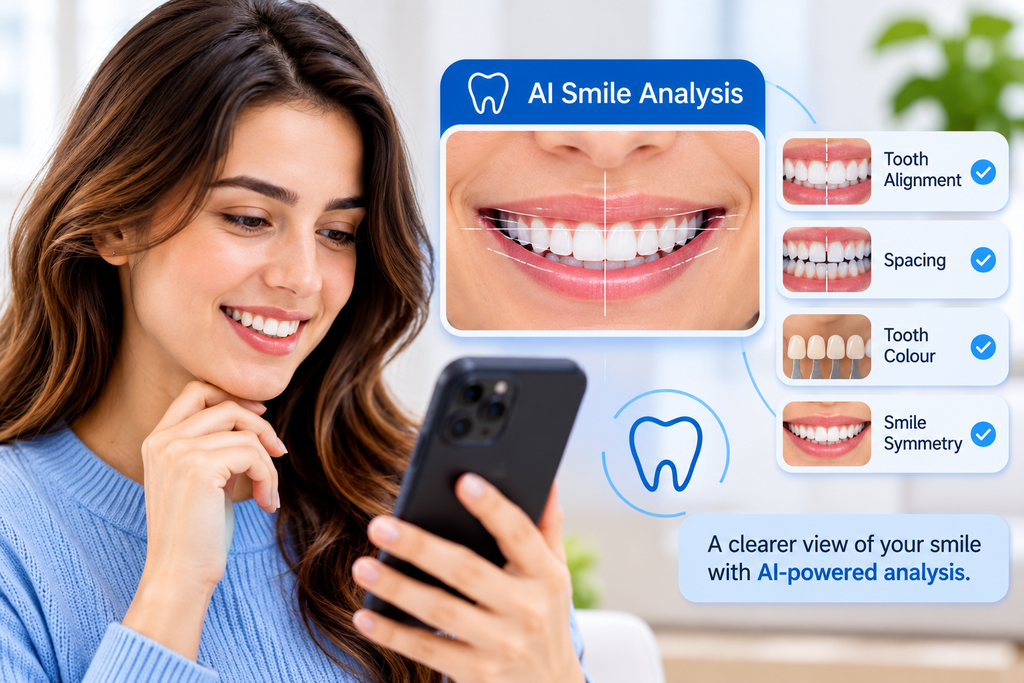
A photograph-based smile assessment may examine visible tooth alignment, spacing between teeth, tooth colour, and the relationship between teeth and the surrounding smile. These observations can be useful when someone is exploring cosmetic concerns, such as uneven-looking teeth or visible discolouration.
The quality of the assessment depends on the software, the photograph, and the characteristics being evaluated. A photograph cannot show every part of the mouth, and visible features do not always reveal the underlying cause of a dental concern. For example, a tooth that appears discoloured may require an examination to determine whether the change is related to staining, tooth structure, or another issue.
How AI Analysis Differs From a Dentist’s Examination
A dentist’s examination involves more than analysing the appearance of teeth in a photograph. A qualified dental professional can consider a patient’s dental history, examine the mouth, assess the gums and bite, and determine whether further diagnostic procedures are appropriate.
Digital dental technologies can support parts of the assessment process, but they do not independently establish a complete diagnosis. The NHS explains that dental examinations and treatments address a range of conditions, including tooth decay, gum problems, and damaged or missing teeth.
NHS
For this reason, an AI-generated observation should be treated as information to discuss with a dentist rather than a final treatment decision. This distinction is particularly important when a person has pain, bleeding gums, tooth sensitivity, or another symptom that may indicate an underlying dental problem.
How BrassSmile Fits Into Cosmetic Dentistry and Orthodontics
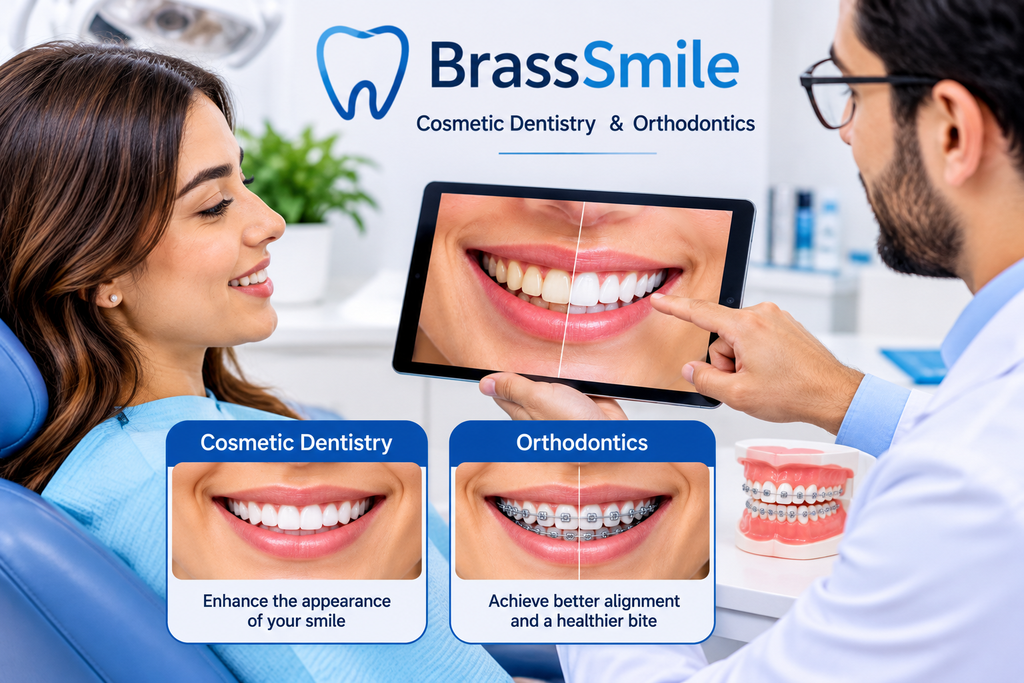
Cosmetic dentistry and orthodontics can both contribute to smile improvement, but they address different needs. Cosmetic dentistry generally focuses on the appearance of teeth, while orthodontic treatment focuses on tooth position and bite alignment. Some people may benefit from one approach, while others may require a combination of treatments.
AI smile analysis may help users explore these possibilities by highlighting visible features of their smiles. However, the suitability of a treatment depends on oral health, tooth structure, individual goals, and professional assessment. The availability of any particular treatment through BrassSmile should be verified directly rather than assumed.
Cosmetic Dentistry and the Appearance of a Smile
Cosmetic dentistry includes procedures intended to improve the appearance of teeth. Depending on the patient’s needs, these may include professional teeth whitening, dental bonding, porcelain veneers, or other restorative options that affect the visible shape or colour of teeth.
Professional teeth whitening can reduce certain types of tooth discolouration, while bonding may be used to improve the appearance of selected chipped or uneven teeth. Veneers are thin coverings placed over the front of teeth, and their suitability depends on the condition of the teeth and the patient’s treatment goals.
These procedures are not interchangeable. Whitening changes the colour of natural teeth, whereas veneers and bonding involve dental materials that alter or cover parts of the tooth’s visible surface. The NHS describes veneers as coverings used to disguise concerns such as discolouration or chipped teeth, while also explaining that whitening is a separate cosmetic procedure.
NHS
A dental consultation can help determine which option is appropriate and whether an existing oral health problem should be addressed first. Patients should also understand the expected maintenance, potential sensitivity, and full treatment cost before agreeing to a procedure.
Orthodontics and Tooth Alignment
Orthodontic treatment addresses the position of teeth and, where appropriate, the relationship between the upper and lower jaws. Clear aligners and traditional braces are common approaches to moving teeth into a more suitable position. The choice depends on the nature of the alignment problem and the individual’s clinical needs.
A smile photograph may show visible spacing or crowding, but it cannot provide a complete assessment of the bite. A professional bite assessment considers how the teeth meet and whether alignment problems may affect function as well as appearance.
Orthodontic treatment also requires planning and monitoring. Readers considering clear aligners or braces should understand the expected treatment duration, maintenance requirements, and need for follow-up appointments. The NHS explains that braces are used to move or straighten teeth to improve both their appearance and how they function.
NHS
What to Expect When Using an AI Smile Assessment
The experience of using an AI smile assessment depends on the particular platform. Some tools ask users to upload a photograph and then generate observations about visible smile characteristics. Others may provide a written report or a visual treatment simulation. These features should not be assumed to exist on every BrassSmile website.
Before using a tool, readers should understand what information it requests and what the resulting assessment is intended to provide. If the platform produces cosmetic suggestions, users should consider them as general information rather than instructions to begin treatment.
The next step is to review the results in the context of individual dental needs. Someone interested in tooth colour may need different advice from someone concerned about gum recession, tooth grinding, or bite alignment. A digital assessment may help clarify questions, but a dental professional can determine whether further examination or treatment is appropriate.
Readers should also review the platform’s privacy information before uploading a photograph. A smile image may contain identifiable facial information, so users should understand how the website handles uploaded images, how long they may be retained, and whether deletion is possible.
Can AI Smile Analysis Replace a Dentist?
No. AI smile analysis cannot replace a comprehensive dental examination. It may help people explore visible characteristics of their smiles, but it cannot independently evaluate every aspect of oral health or establish the cause of a dental condition.
A photograph-based assessment cannot reliably show every problem that may affect teeth, gums, or supporting bone. Conditions such as tooth decay, gum disease, and certain bite problems may require clinical examination or additional diagnostic information. A digital report should therefore not be used to rule out a dental problem.
The same distinction applies to treatment recommendations. A software-generated suggestion may identify a cosmetic possibility, but a dentist must consider whether the proposed treatment is appropriate for the person’s oral health and circumstances. Informed consent also requires understanding the treatment, its limitations, potential risks, and available alternatives.
The NHS provides information about dental treatments and explains that treatment recommendations depend on the type of dental problem and the circumstances of the patient.
NHS
Readers should seek professional advice when they have symptoms or are considering a procedure that changes their teeth.
How to Evaluate a Digital Smile Assessment Before Using It
A digital smile assessment is most useful when readers understand its purpose and limitations. Before relying on a platform, they should verify the identity of the website, review its published information, and determine whether it offers general educational guidance, cosmetic visualisation, or a service connected to professional dental care.
The name BrassSmile alone does not establish that a website is a dental clinic or that it provides a particular treatment. Readers should check the exact domain, available contact information, and the services actually described by the website. This is especially important when several websites use similar names.
Understanding the Accuracy and Limitations of AI Results
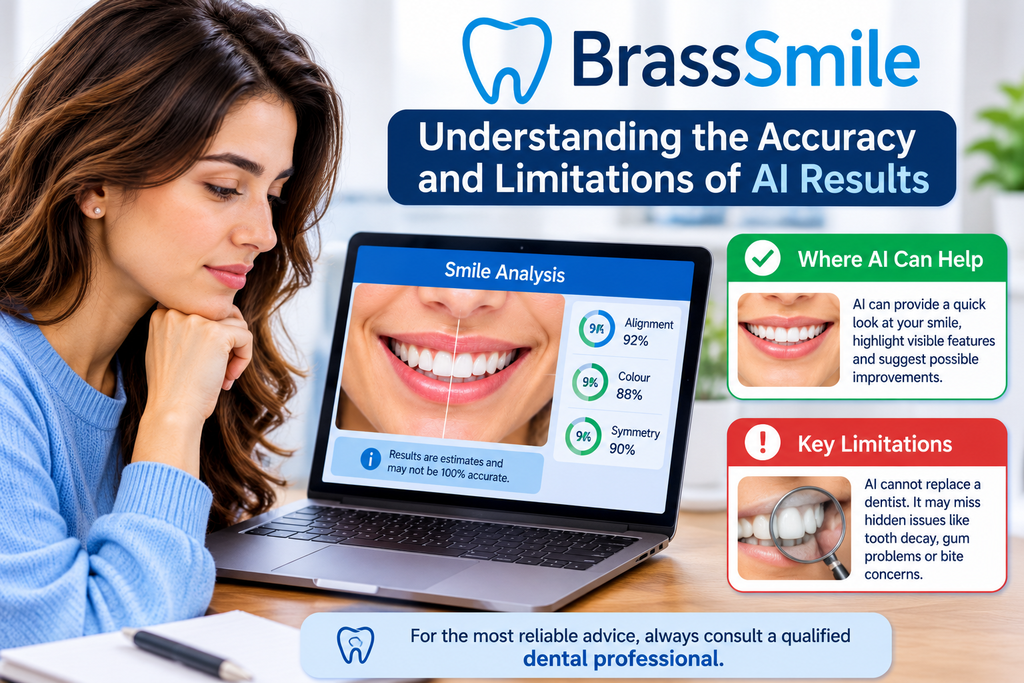
The reliability of an AI assessment depends on the technology and the information it can evaluate. A clear photograph may support observations about visible tooth colour or spacing, but it does not reveal every clinical factor that influences treatment decisions.
Readers should be cautious about claims of perfect accuracy or guaranteed cosmetic outcomes. A visual simulation may illustrate a possible change, but actual results depend on the person’s teeth, oral health, treatment method, and professional care. Realistic dental goals should be based on an assessment of individual circumstances rather than an idealised image.
Privacy and the Use of Smile Images
Before uploading a photograph, users should read the website’s privacy policy and understand how their information is handled. They should look for clear explanations of image storage, data use, sharing practices, and available options for deleting personal information.
A website’s privacy statement should be checked directly rather than assumed to apply because another website uses the same brand name. Readers should also avoid sharing more personal information than a tool genuinely requires. When privacy terms are unclear, it is reasonable to seek clarification before uploading a photograph.
When Professional Dental Advice Is More Appropriate
Professional dental advice is particularly important when a person has symptoms or concerns that may involve oral health rather than appearance alone. Persistent tooth sensitivity, bleeding gums, swelling, pain, or a sudden change in tooth colour should not be treated as purely cosmetic issues.
A dentist can assess whether the concern involves tooth decay, gum disease, enamel erosion, or another condition that needs attention. Early diagnosis can help identify problems before they become more difficult to manage. A digital smile assessment may help someone describe a concern, but it should not delay appropriate dental care.
Is BrassSmile Suitable for Users Outside the United States?
The suitability of BrassSmile for international users depends on the particular website and service. A digital tool may be accessible online from different countries, but that does not automatically mean that its dental services, treatment options, or professional consultations are available internationally.
Readers in the United Kingdom, France, other European countries, and Asian markets should verify the website’s actual geographic availability. They should also check whether the service supports their language, whether prices are displayed in a relevant currency, and whether any treatment requires an in-person appointment.
Dental care arrangements and professional requirements differ between countries. For example, the NHS provides guidance about dental treatment and costs within the UK healthcare system, while readers elsewhere should consult the relevant local dental authorities and qualified professionals.
NHS
The distinction between online information and in-person treatment is particularly important for international users. A digital report may help someone understand visible smile characteristics, but any treatment plan must account for local professional care, clinical assessment, and follow-up requirements.
How to Decide Whether BrassSmile Meets Your Dental Needs
The right approach depends on what the reader wants to understand or improve. Someone exploring the appearance of their smile may find general information or a digital assessment useful, while someone concerned about pain, tooth damage, or gum health needs professional dental advice.
Readers should first establish what the specific BrassSmile website provides. If it offers an AI smile assessment, they should understand what the tool examines and what its results mean. If it describes dental services, they should verify the provider’s identity, qualifications, treatment options, and contact details before making an appointment or payment.
Treatment decisions should also account for long-term dental health. A procedure that changes the appearance of teeth may involve maintenance, future appointments, or changes to natural tooth structure. Understanding these considerations helps patients set realistic expectations and make informed decisions.
A qualified dental professional can explain the available options, expected outcomes, and full treatment cost. This discussion is particularly useful when someone is considering veneers, orthodontic treatment, implants, or other procedures that require individual planning.
What to Understand Before Taking the Next Step With BrassSmile
BrassSmile is associated with several different online dental-related descriptions, so the first priority is to identify the exact website and confirm what it actually offers. Readers should not assume that every website using the name represents the same business, dental clinic, or AI platform.
AI smile analysis can provide a useful starting point for exploring visible smile characteristics. However, it should be understood as a digital assessment rather than a complete dental examination. Cosmetic dentistry and orthodontic treatment require individual consideration, and professional advice remains important when making decisions about oral health.
A healthy smile also depends on everyday care. Regular brushing with fluoride toothpaste, appropriate cleaning between teeth, preventive dental visits, and attention to changes in oral health can support long-term dental wellbeing. Digital tools may help people become more informed about their smiles, but they work best when used alongside reliable information and appropriate professional care.